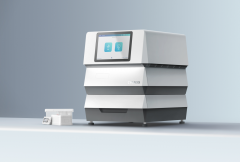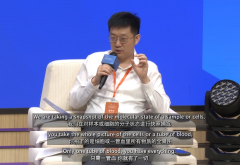
As sequencing becomes faster, more scalable and more accessible, what will drive the next wave of innovation? This question took center stage at the “Genomic Sequencing Revolution” panel during the “25 Years of the Human Genome” International Symposium in Beijing.
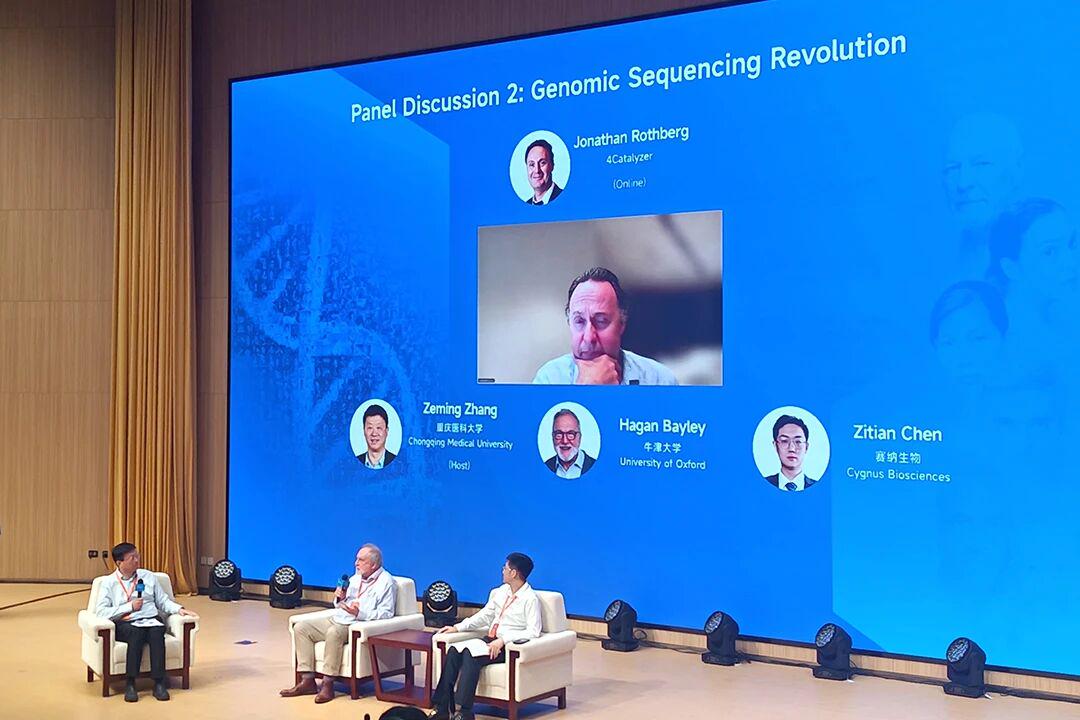
During a panel discussion titled “Genomic Sequencing Revolution,” Dr. Zitian Chen, Co-founder and CEO of Cygnus Biosciences, joined Dr. Jonathan Rothberg, a pioneer of next-generation sequencing, and Prof. Hagan Bayley, a pioneer in protein nanopore sensing and single-molecule sequencing. Drawing on different generations of sequencing innovation, the panelists discussed the technological advances that have shaped modern genomics and explored what may define its next chapter.
The discussion was moderated by Prof. Zemin Zhang, Member of the Chinese Academy of Sciences and President of Chongqing Medical University.
01. From Sequence to Molecular Insight
Sequencing has evolved dramatically in speed, scale and capability. As generating sequence data at scale becomes increasingly routine, attention is shifting toward what more can be captured from a biological sample.
Dr. Chen suggested that the future of sequencing may extend well beyond simply reading nucleotide sequences. Instead, sequencing technologies could evolve toward capturing a more complete picture of the molecular state of a biological sample.
“Sequencing is not only sequencing anymore.”
In this vision, an ideal sequencing platform would enable standardized, integrated measurement of genomic DNA, RNA, DNA methylation, and potentially other molecular information from the same sample, preserving as much of the multidimensional biological state of a cell, tissue, or blood sample as possible.
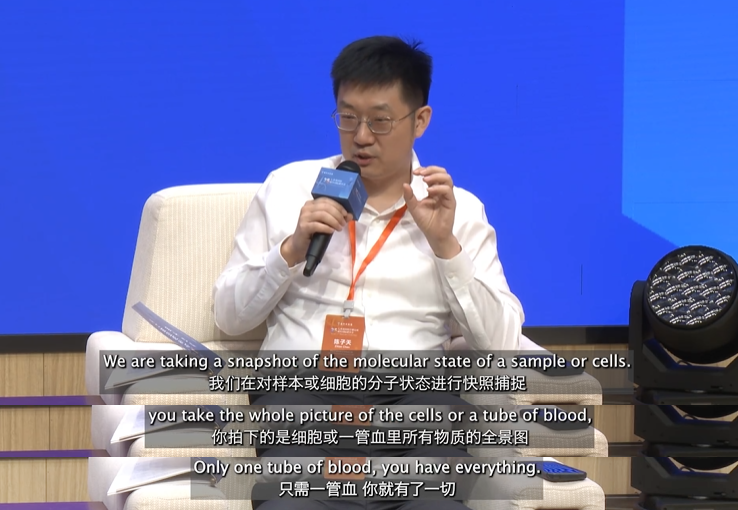
Under this framework, each sequencing experiment could become a multidimensional molecular “snapshot” of a biological sample. As these datasets accumulate at scale, they could help researchers uncover new biological patterns, identify clinically meaningful signals, and provide rich data for the development and training of AI models in life sciences.
Achieving this vision, however, will require sequencing technologies to continue advancing in three fundamental direction, including greater efficiency, lower cost, and broader accessibility, priorities that have driven sequencing innovation throughout the past 25 years.
02. 25 Years of Sequencing Breakthroughs
Lately, sequencing has advanced through a series of major technology shifts. Dr. Jonathan Rothberg, founder of 454 Life Sciences, helped pioneer massively parallel DNA sequencing and later founded Ion Torrent, bringing semiconductor technology into sequencing. These advances played an important role in increasing throughput and driving down the cost of genome sequencing.
Dr. Rothberg also noted, technological breakthroughs come from innovation, but it is their applications that ultimately change our lives. Personalized mRNA cancer vaccines are one example of how advances in genomic sequencing are opening new possibilities in medicine.

Another major direction came from Prof. Hagan Bayley, whose work in protein nanopore sensing helped lay the foundation for nanopore sequencing. He co-founded Oxford Nanopore Technologies, advancing single-molecule sequencing and expanding the types of molecular information that could be read directly.
Prof. Hagan Bayley highlighted the importance of moving beyond sequence identification to understand what is happening within individual molecules. His team is advancing nanopore technology to capture molecular modifications, structural features and other dimensions of biological information, with potential value for both fundamental research and clinical assays.
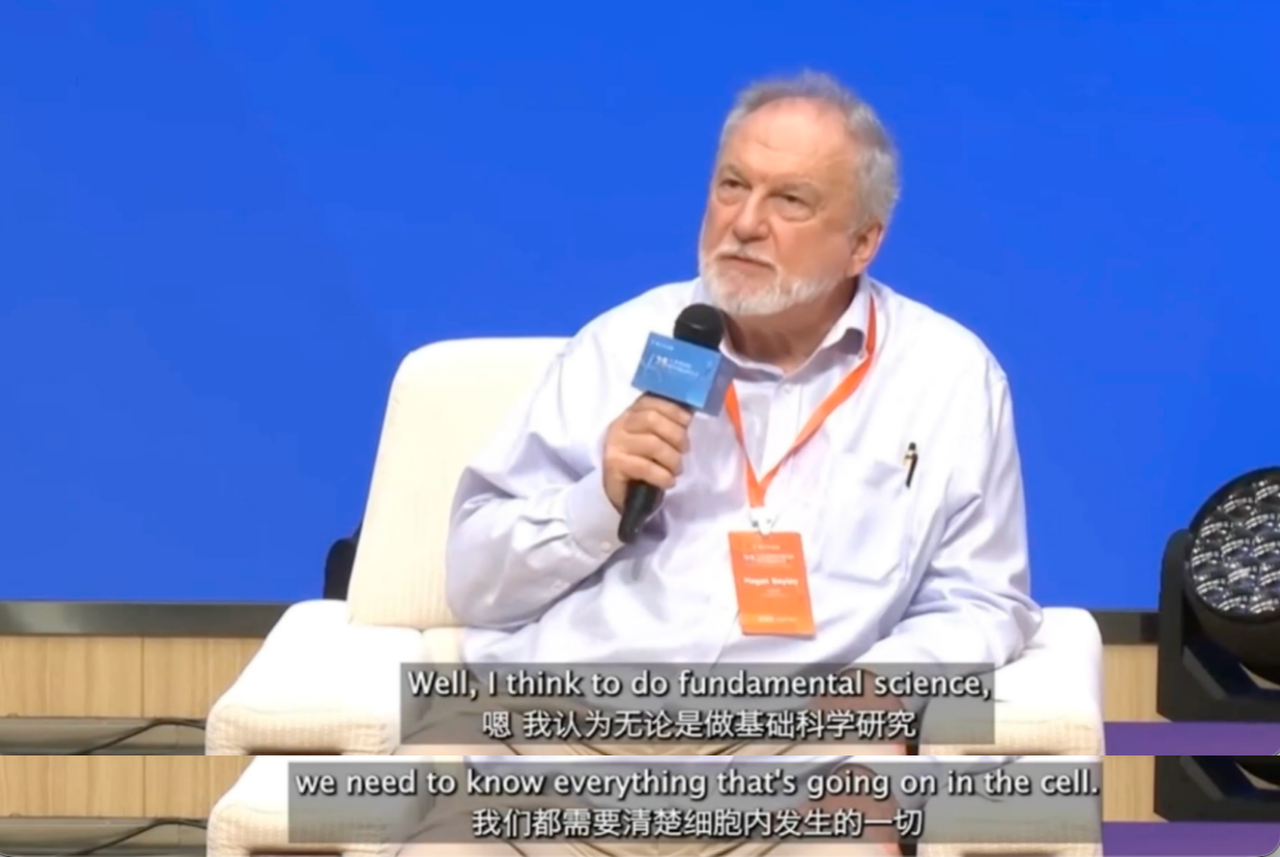
From massively parallel sequencing and semiconductor detection to nanopore and single-molecule approaches, successive generations of technology have expanded the scale, economics and applications of sequencing, laying the foundation for further innovation.
03. Advancing Sequencing Economics and Performance
Prof. Yanyi Huang of Changping Laboratory and Peking University, Co-founder of Cygnus Biosciences and a co-organizer of the symposium, has long worked at the intersection of single-cell analytical chemistry, microfluidics, and high-throughput sequencing.
At the symposium, Prof. Huang introduced LumoSeq, a sequencing technology co-developed by his team, highlighting opportunities for further improvements in sequencing efficiency, economics, and accessibility.
Dr. Zitian Chen has led the commercialization of LumoSeq at Cygnus Biosciences. With reducing the cost of sequencing as a key objective, Cygnus has continued to advance the technology from laboratory innovation toward practical applications.
These efforts include the development of LoopChip flowcell regeneration technology, enabling key sequencing consumables to be reused, alongside advances in sequencing chemistry and material systems designed to deliver high sequencing accuracy. Together, these innovations are helping translate LumoSeq into a scalable sequencing platform for real-world research and application needs.
04. The Next Frontier of Sequencing
The Human Genome Project (HGP) was one of the most influential scientific endeavors of the 20th century, often mentioned alongside the Manhattan Project and the Apollo Program as landmark scientific undertakings of the era. The publication of the first human genome drafts in 2001 marked the beginning of the genomic era.
Over the past 25 years, advances in sequencing, single-cell analysis, multi-omics and computational biology have continued to expand our understanding of biology and transform disease research, precision medicine and public health. Today, the focus is shifting from generating more sequence data to what we can learn and ultimately achieve with it.
Looking ahead, Prof. Zemin Zhang highlighted three priorities for the next stage of sequencing, new ways to read biological information, greater scale, and better translation of sequencing data into biological and medical insights.
For Cygnus, this means continuing to make sequencing more efficient, affordable and accessible while enabling a more complete view of biology.