Recently, a research achievement in ancient genomics, jointly completed by teams led by Yanyi Huang and Yuhong from the Beijing Advanced Innovation Center for Biomedical Engineering, Peking University, and teams led by Zhang Chi and Xiaohong Wu from the School of Archaeology and Museology, was published in Nature Communications. Based on the whole-genome analysis of ancient individuals from the Baligang site on the northern edge of the Yangtze River Basin in China, the study systematically revealed the complex dynamic exchange history of populations between the Yangtze and Yellow River Basins in prehistoric times.
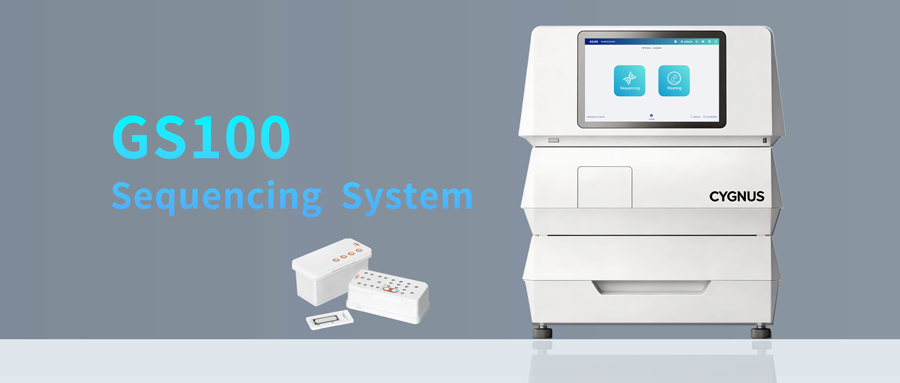
This landmark research achievement, using high-throughput gene sequencing technology and direct genetic evidence, established that a patrilineal social organization structure tied by male blood existed in the late Neolithic Age of China 5,000 years ago. The independently developed GS100 (S100) gene sequencer by Cygnus Bio, with its high sequencing accuracy and reliable performance, was adopted by the research team in the ancient DNA sample processing and key data generation links, playing an important role.
1. Revealing the Dynamic Interaction History of Civilizations in the Yellow and Yangtze Rivers
Based on the whole-genome analysis of 58 ancient individuals from the Baligang site, the northern edge of the Yangtze River Basin, the study conducted the first long-term and systematic ancient genomics research on Neolithic populations in this region. It clearly depicted the dynamic history of population migration and integration between the two major cultural hinterlands of the Yangtze and Yellow River Basins in China, and revealed the complex connection between such exchanges and cultural dissemination as well as agricultural expansion.
The study found that as early as the middle Neolithic Age, about 6,500 years ago, the ancient Southern and Northern East Asian genetic components, represented by populations from the southeastern coast of China and the Shandong Peninsula, had undergone in-depth mixing in the area around the Baligang site. In the following thousands of years, such exchanges showed continuous dynamic changes. Notably, during the Shijiahe Culture period about 4,200 years ago, there was an obvious inflow of Southern genetic components, and the genetic diversity and effective population size of the population also reached a peak, indicating a key watershed node with large-scale genetic mixing. The core achievement is that through the analysis of the large-scale secondary collective burial tomb (M13) in the late Yangshao Culture, the study confirmed for the first time through genetic evidence that a patrilineal social organization of a certain scale existed in this region as early as 5,000 years ago.
2. mtDNA Diversity Establishes the Evidence Chain for Patrilineal Society
A core challenge in ancient DNA research is the severe degradation of samples and fragmentation of DNA molecules. To address this problem, the research team improved the ancient DNA double-strand library construction method. In this process, the Cygnus Bio S100 gene sequencer was used for the sequencing of mitochondrial DNA (mtDNA), which is crucial for revealing the maternal genetic background.
With its high accuracy and excellent compatibility, the GS100 (S100) sequencer effectively supported the research team in accurately reading the sparse mtDNA sequences in ancient DNA samples, providing stable and reliable data for subsequent population genetic analysis. Through comparative analysis, the study found that all males in Tomb M13 had highly consistent Y-chromosome haplogroups, indicating close patrilineal genetic relationships; while the female mitochondrial DNA haplogroups revealed by the S100 sequencing data showed extremely high diversity.
This genetic characteristic of "single patriline and diverse matriline" is a typical genetic indicator of the marriage model of "female exogamy and virilocal residence" in patrilineal societies. The high-precision mtDNA data and Y-chromosome results mutually confirmed, successfully constructing a kinship structure tied by male blood, and providing key genetic evidence for establishing the patrilineal social organization form 5,000 years ago.
3. Domestic Sequencing Platform Empowers Cutting-Edge Life Science Research
The application of the Cygnus Bio GS100 (S100) gene sequencer in this national-level major scientific research achievement, especially its important role in the sequencing of key genetic markers of high-difficulty ancient DNA samples, fully confirms the technical strength of Cygnus Bio's sequencers.
As an original research enterprise of gene sequencers with patented technologies, Cygnus Bio's GS100 (S100) sequencer not only serves basic scientific research with high accuracy and reliability but also has obtained the EU CE-IVDR certification.
In the future, Cygnus Bio will continue to deepen technological innovation, continuously improve sequencer performance, and promote the wide application of gene sequencing technology in all fields such as life science research, tumor prevention and control, pathogenic microorganism detection, and reproductive health.